5+ Carrier Portals Replaced by One Dispatch Layer: Rate Shopping in Seconds, Not Browser Tabs
Parcel, LTL, and freight carrier APIs unified with the WMS and ERP. Dispatch 70% faster. Tracking unified. Billing reconciliation automated.
Written by Shubham(opens in new tab), Founder at BestlaTech · Published April 2, 2026
Engagement Type
Multi-Carrier API Integration
Duration
7 Weeks
Client
US Logistics Operator
Client
US Logistics Operator
Duration
7 weeks
Category
Logistics / Supply Chain
Client's Markets
US
Carrier APIs Connected
5+
Parcel, LTL, and freight
Faster Dispatch
70%
Automated rate shopping and assignment
Billing Accuracy
98%
Quoted-vs-billed variance flagged automatically
Delivered in Production
7 wks
Fixed scope, fixed price
Key Facts
BestlaTech connected 5+ carrier APIs (parcel, LTL, freight), a warehouse management system, and an ERP into one real-time dispatch layer for a US logistics operator, replacing manual rate-shopping across carrier portals with automated best-rate selection and unified shipment tracking.
Client:
A US logistics and supply-chain operatorWhat was built:
A dispatch integration layer: 5+ carrier APIs, WMS, and ERP unified with automated rate shopping, tracking webhooks, and billing reconciliationTimeline:
7 weeks, discovery to productionEngagement model:
Fixed scope, fixed priceResult:
70% faster shipment assignment; unified real-time tracking across all carriers; billing accuracy improved to 98%The Challenge
Manual Rate-Shopping Across Carriers
Dispatchers checked each carrier's rates and capacity by hand, one portal at a time. Slow, error-prone, and the best rate was routinely missed.
No Unified Shipment Visibility
Tracking information scattered across 5+ carrier portals. Customers were left in the dark, and every status question meant a manual lookup.
Billing Reconciliation Nightmares
Actual charges never matched quotes. Manual invoice reconciliation ate hours of team time every month, and errors slipped through.
Map Every Carrier's Quirks First. Then Build One Layer Over All of Them.
Carrier APIs are notoriously inconsistent: different auth schemes, different rate structures, different tracking event vocabularies. We spent the first week documenting each carrier's API surface and failure modes, then designed one normalized dispatch model that absorbs those differences so the dispatch team never has to think about them.
Carrier API Audit Before Code
Every carrier's rating, label, and tracking endpoints documented (including rate structure differences between parcel, LTL, and freight) before the integration was scoped.
Automated Rate-Shopping Engine
One request fans out to every connected carrier, normalizes the quotes, and returns the best option by cost and transit time in seconds. Dispatchers approve; they don't hunt.
Unified Tracking via Webhooks
Carrier tracking events flow into one normalized shipment timeline. Customers see live status without anyone opening a carrier portal.
Automated Billing Reconciliation
Every carrier invoice is matched against the quoted rate at booking. Variances are flagged automatically instead of being discovered, or missed, at month-end.
Technologies Used
Key Features
Multi-carrier API integration: parcel, LTL, and freight rating, booking, and label generation
Automated rate-shopping engine comparing all connected carriers in one request
Unified real-time tracking timeline fed by carrier webhooks
Quoted-vs-billed reconciliation with automatic variance flagging
WMS and ERP sync: shipment, label, and cost data flowing without re-keying
Per-carrier error handling, retries, and rate-limit management
Runbooks and documentation for adding new carriers post-launch
Results & Impact
5+ carrier APIs connected into a single dispatch platform
70% faster shipment assignment with automated rate shopping
Real-time customer tracking across all carriers
Billing accuracy improved to 98% with automated variance flagging
Carrier costs reduced through consistent best-rate selection
Delivered in 7 weeks on fixed scope, fixed price
Dispatchers stopped being browser-tab operators. Every shipment gets the best rate automatically, every customer sees live tracking, and month-end invoice reconciliation went from a manual hunt to an exception report.
Before vs After
| Before | After | |
|---|---|---|
| Rate shopping | Manual checks across 5+ carrier portals | Automated comparison in seconds |
| Shipment tracking | Scattered across carrier portals | One unified real-time timeline |
| Billing reconciliation | Hours of manual invoice matching | Automated, variances flagged |
| Dispatch speed | Minutes per shipment, dispatcher-bound | 70% faster, one-click assignment |
If Your Dispatch Team Lives in Carrier Portals, This Is Solvable.
Any operation shipping across multiple carriers hits the same three walls: manual rate shopping, fragmented tracking, and invoices that don't match quotes. The integration layer that fixes all three is a known, buildable thing.
3PLs & Fulfillment Providers
You ship across many carriers for many clients. A unified dispatch layer is the difference between scaling operations and scaling headcount.
E-Commerce Operations Teams
Your order volume outgrew manual carrier selection. Automated rate shopping pays for itself in carrier savings alone.
Freight Brokers & Shippers
You need real-time visibility across parcel, LTL, and freight, and billing reconciliation that catches variances before you pay them.
Your Dispatchers Should Approve Shipments, Not Hunt for Rates.
Most discovery calls take 30 minutes. By the end, you'll know what a carrier integration layer for your operation would look like and what a fixed-scope delivery would involve.
Book Your Free Discovery Call (opens in new tab)Fixed scope. Fixed price. Zero surprises.
Frequently asked questions
Which carrier APIs can you integrate?
How do you handle the differences between carrier APIs?
What happens if a carrier API goes down?
Can you connect our WMS and ERP too?
Who builds multi-carrier shipping API integrations for logistics companies?
How do I automate rate shopping across multiple carriers?
Can carrier integration fix shipping cost and billing reconciliation errors?
How hard is it to add another carrier later?
Talk to an expert
Get expert advice from our official advisors
More of Our Case Studies
Explore our diverse portfolio of successful projects and innovative case studies that showcase our expertise in delivering top-notch solutions.
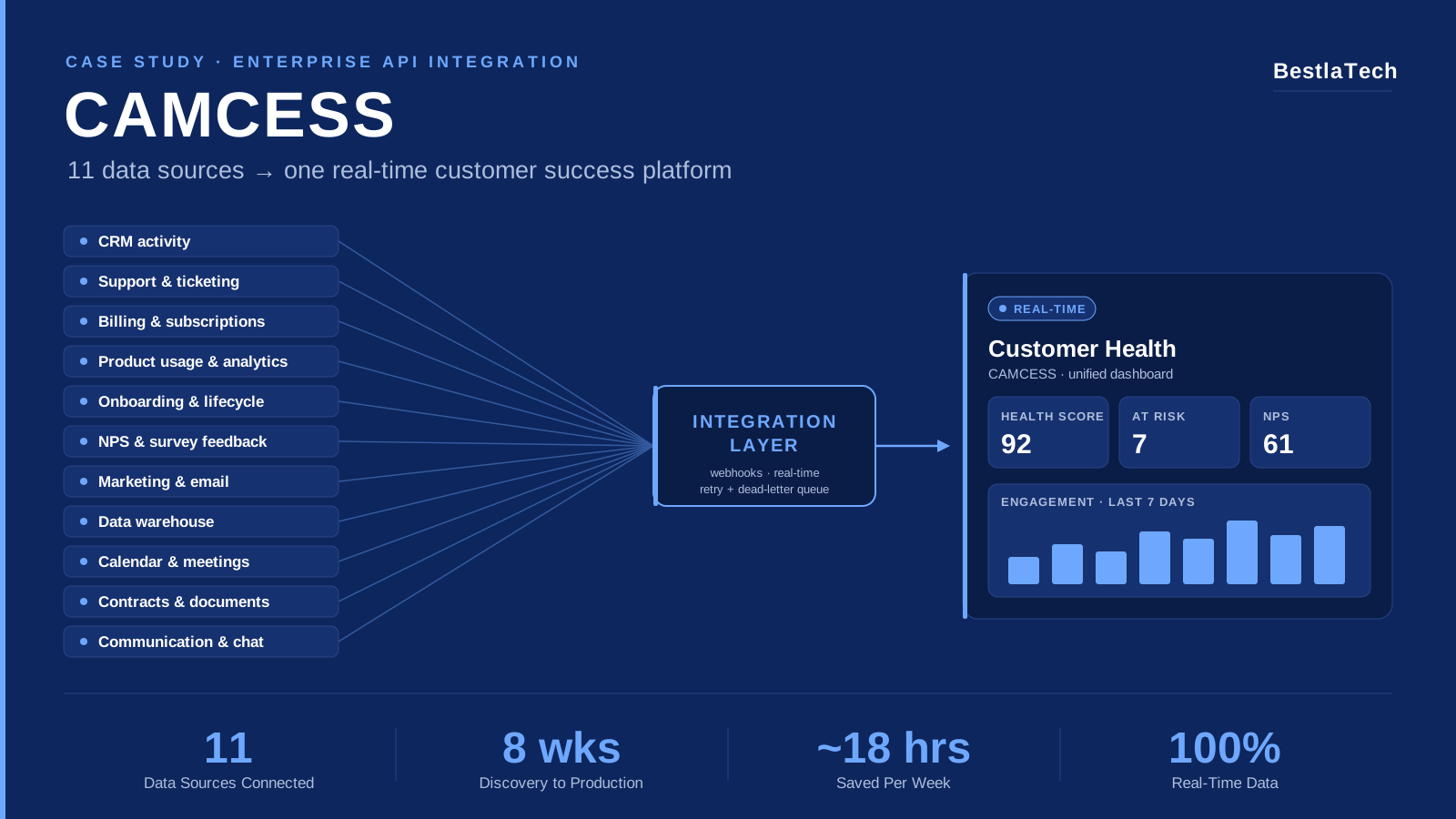
Customer Success SaaS
CAMCESS: How BestlaTech Connected 11 Data Sources into a Real-Time Customer Success Platform
End-to-end enterprise API integration for a B2B customer success SaaS, connecting 11 siloed data sources into a single real-time customer health dashboard, replacing weekly manual reconciliation entirely.
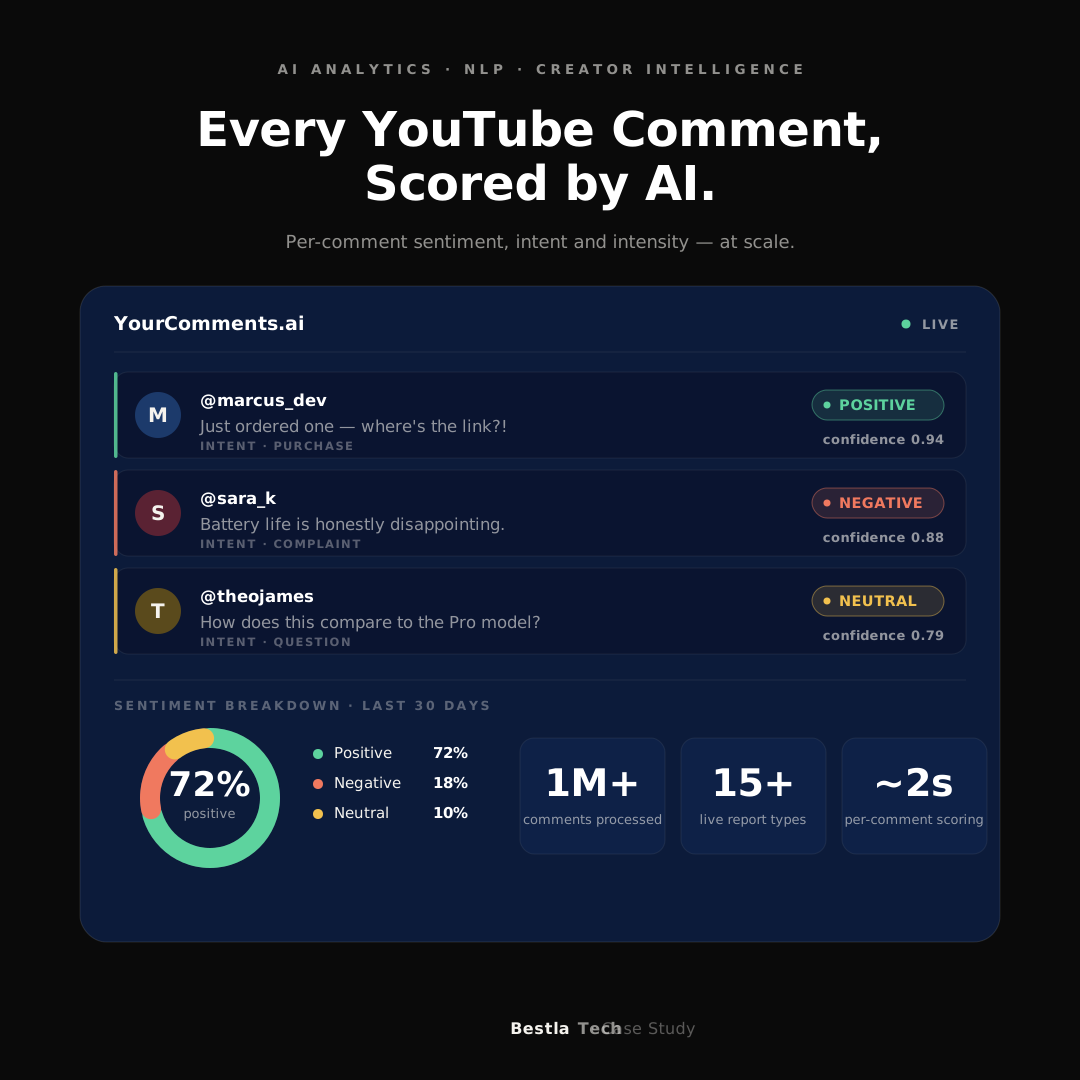
AI Analytics · NLP · Creator Intelligence
YourComments.ai: How BestlaTech Built a YouTube Comment Sentiment Analysis Platform from the Ground Up
Full-stack AI analytics platform built from scratch: fetching YouTube comments at scale, running per-comment sentiment analysis via OpenAI, streaming results through an NDJSON pipeline, and delivering creator and brand intelligence through live Metabase dashboards.
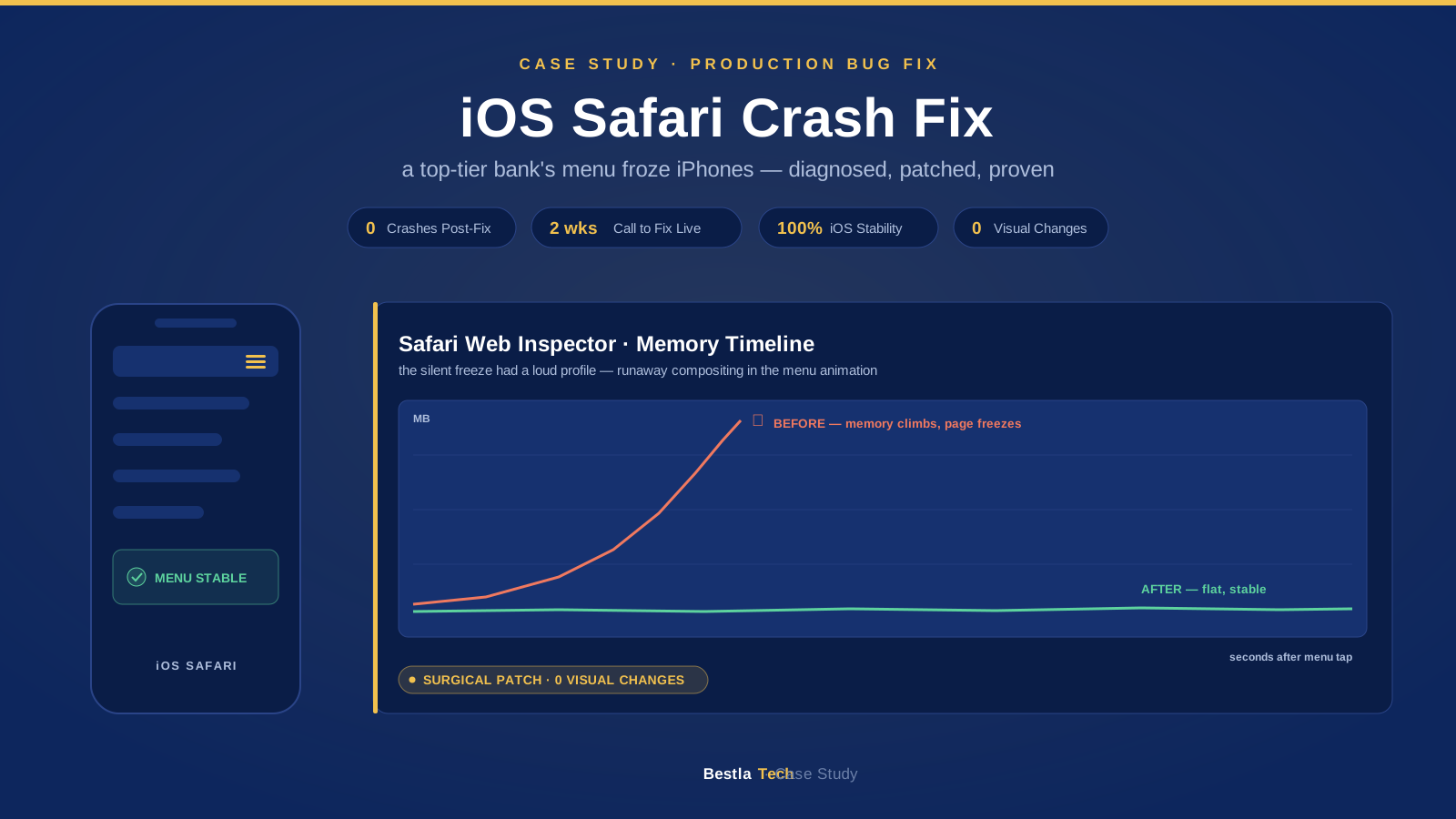
Mobile Web / Performance & Debugging
Diagnosing and Fixing an iOS Safari Navigation Crash on a Top-Tier Indian Bank's High-Traffic Website
Production incident engagement for a top-tier Indian private bank: the website's hamburger menu froze iPhones within seconds of a tap. Root cause diagnosed, patched, and verified across iOS versions in 2 weeks.
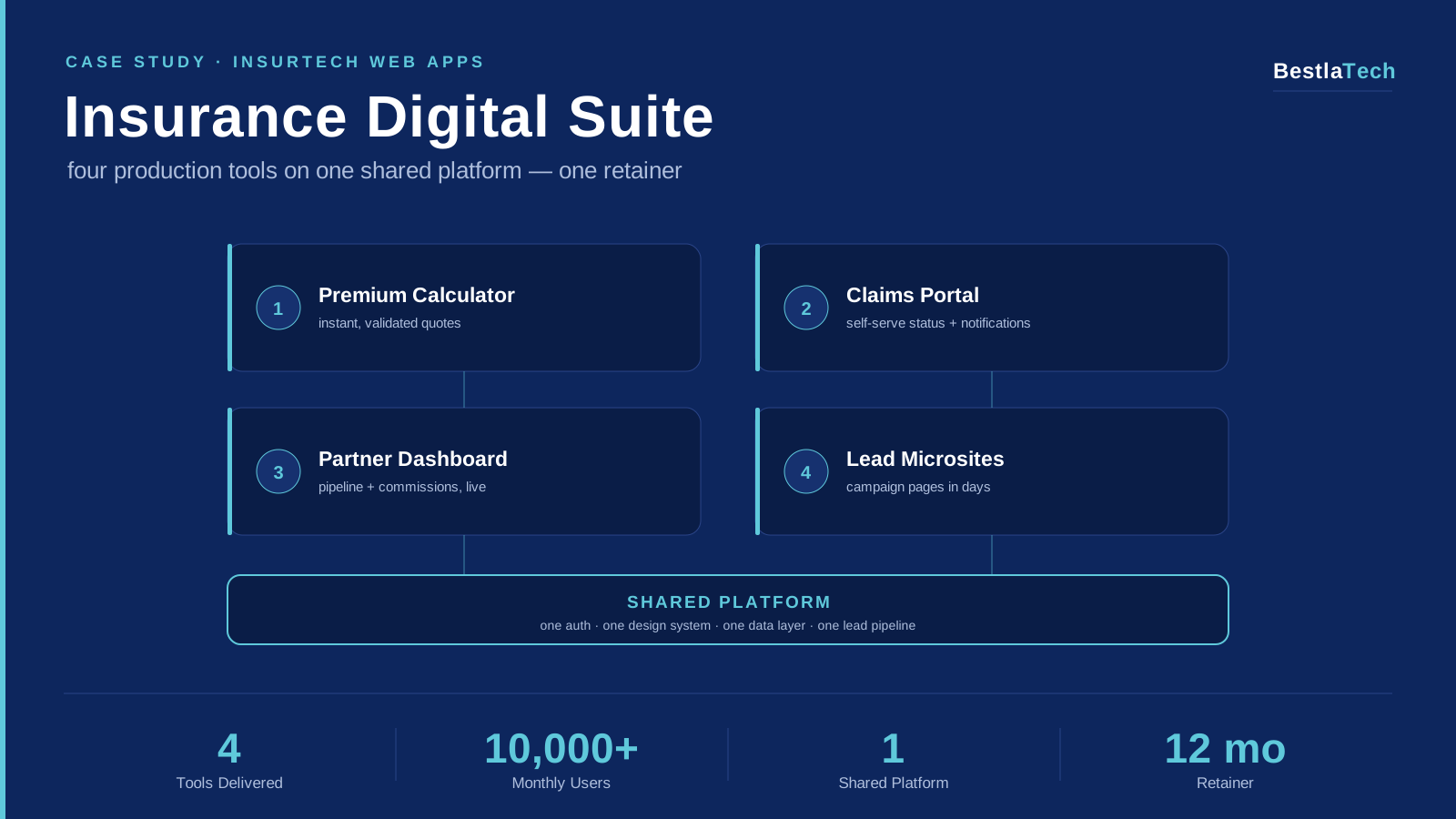
InsurTech / Web App Development
A Multi-Project Digital Suite for an Indian Insurance Broker: Premium Calculator, Claims Portal, Partner Dashboard & Lead Microsites
Multi-project engineering retainer for an Indian insurance broker: four tools delivered on one shared platform: an accurate premium calculator, a self-serve claims tracking portal, a partner/agent dashboard, and campaign lead microsites, now serving 10,000+ monthly users.
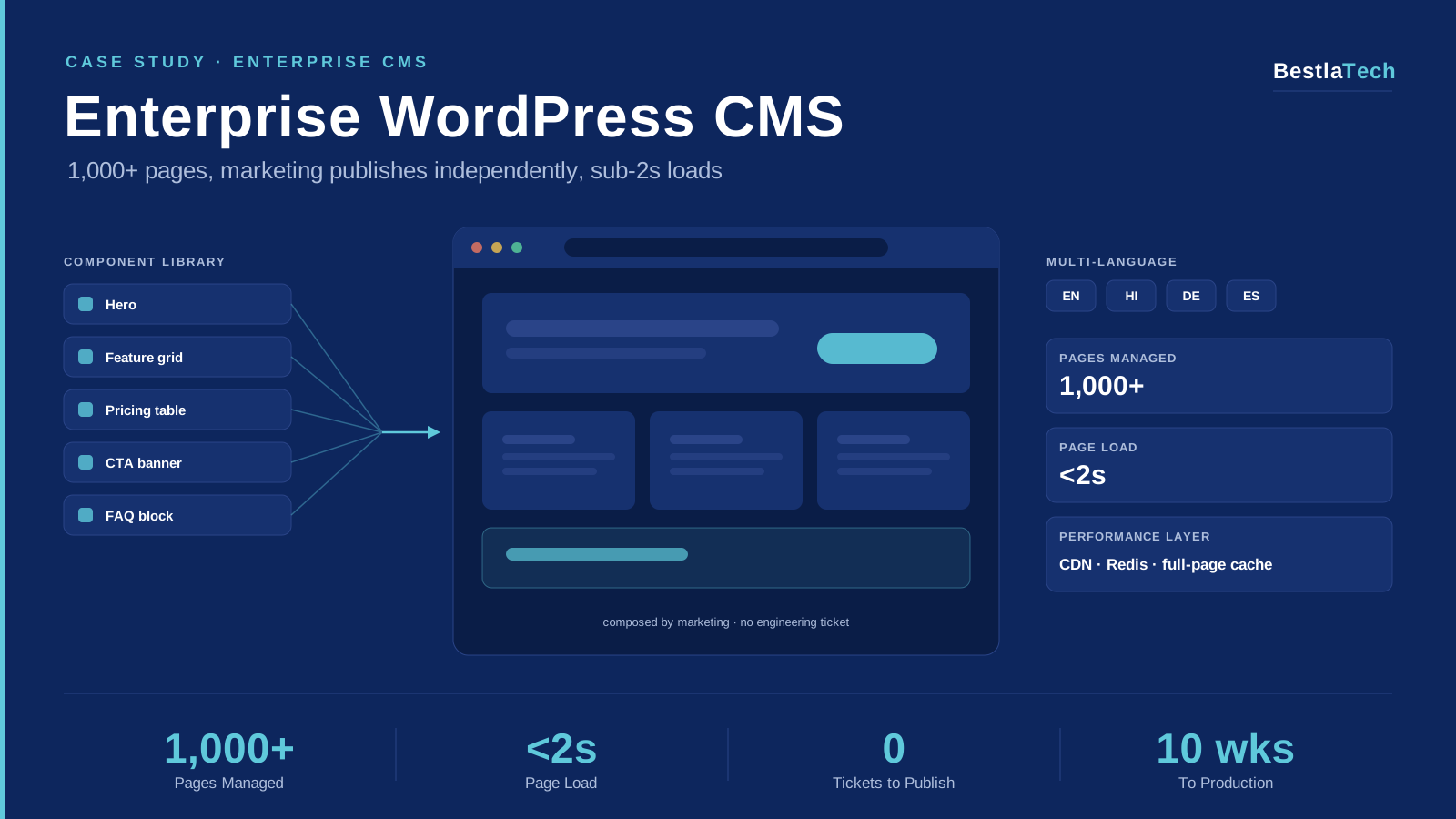
CMS Development / WordPress / Enterprise
An Enterprise WordPress CMS for a Leading CPaaS Company: 1,000+ Pages, Independent Publishing, Sub-2s Loads
Enterprise CMS build for a leading CPaaS company: a custom component-based WordPress theme, structured content architecture, and multi-language support that lets the marketing team publish independently at 1,000+ page scale with sub-2-second loads.
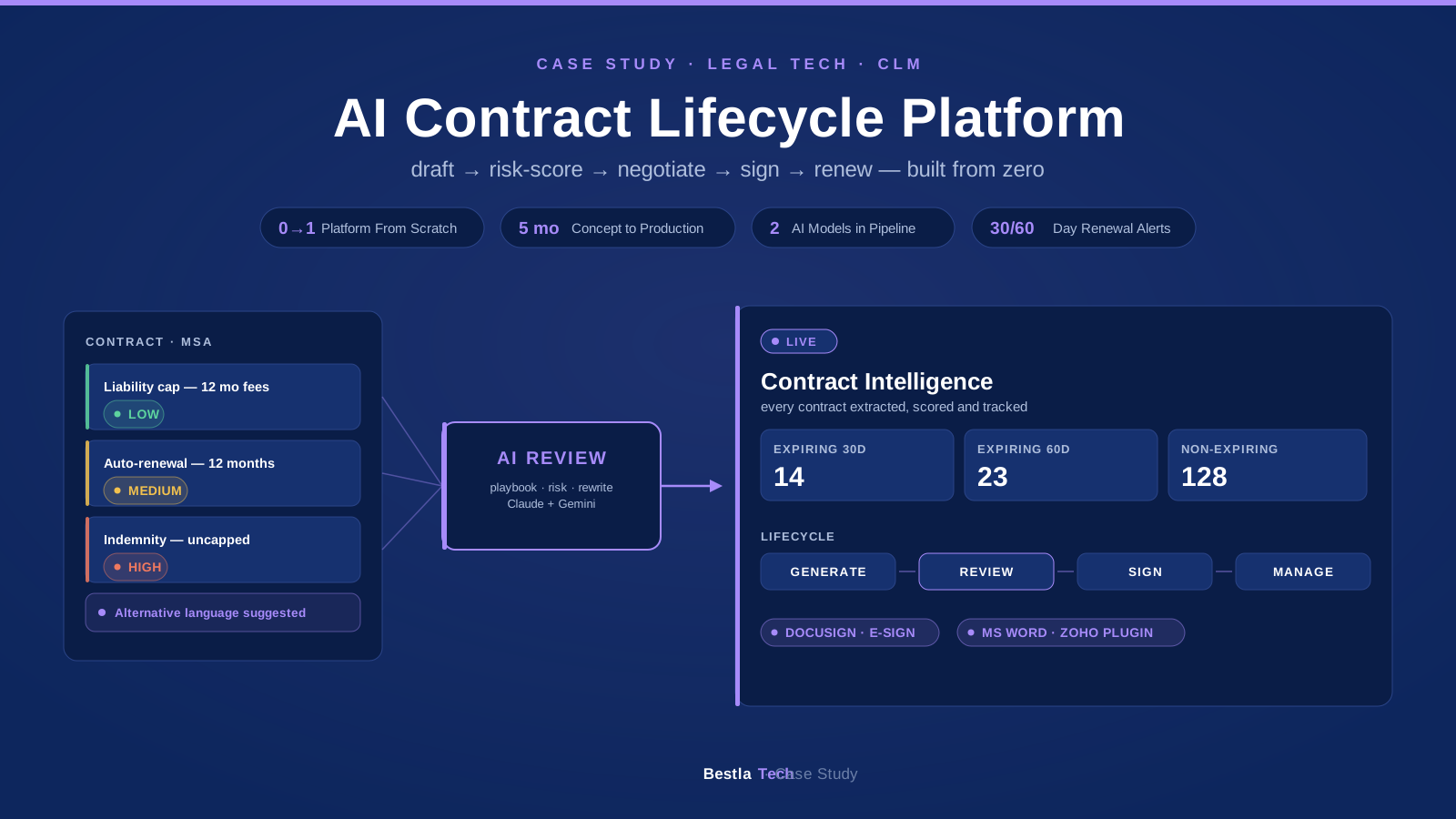
Legal Tech / CLM / AI Platform
Building an AI-Powered CLM Platform from Zero: Contract Generation, Clause Risk Scoring, Playbooks, E-Signature & Renewals
Full CLM (Contract Lifecycle Management) platform built from scratch for a legal-tech SaaS company (client name withheld). AI contract generation, metadata extraction and characterization, clause-by-clause risk scoring with suggested alternative language, playbook-driven review, 30/60-day renewal categorization, DocuSign e-signature, and Microsoft Word integration via a Zoho plugin.
Travel & Tourism
Building a Complete Digital Presence for Travel With Bug Travel Company
End-to-end digital transformation for a travel agency - professional responsive travel website development with WordPress CMS, online booking system, tour package management, and SEO optimization for organic lead generation.
On-Demand Services
Full-Stack Mobile App and Web Development for Mechgiri On-Demand Auto Service Platform
Custom mobile app development and web application for on-demand vehicle servicing - featuring real-time tracking, technician management, automated booking system, secure payment gateway integration, and cross-platform admin dashboard.

E-Commerce
Custom E-Commerce Website Development for BugSpeaks Gut Health Brand
Complete digital transformation from offline to online business - custom e-commerce platform development with Django, automated inventory management, secure payment integration, order tracking system, and scalable cloud infrastructure for health and wellness products.
Agritech / Smart Farming
Redesign and Performance Optimization for Letcetra Agritech
Complete frontend modernization for smart agriculture platform - Next.js development with server-side rendering, React component architecture, mobile-first responsive design, advanced SEO optimization, and performance enhancement for agritech industry leader.
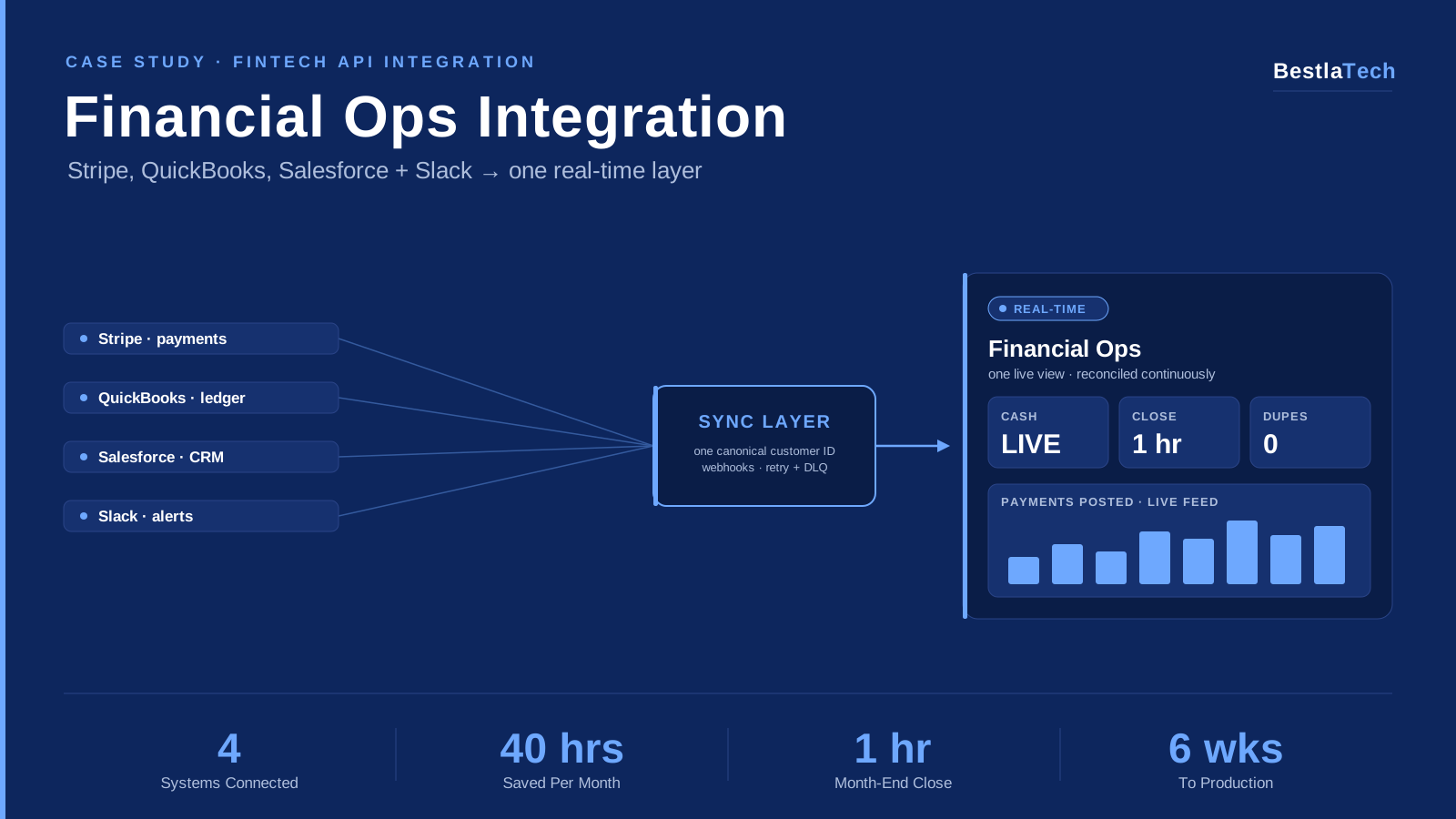
FinTech / Financial Operations
How a US FinTech SaaS Unified Stripe, QuickBooks, Salesforce & Slack into One Real-Time Financial Ops Layer
Multi-system API integration for a venture-backed US fintech SaaS. Stripe, QuickBooks, Salesforce, and Slack connected into one real-time financial operations layer, cutting the month-end close from 3 days to 1 hour.
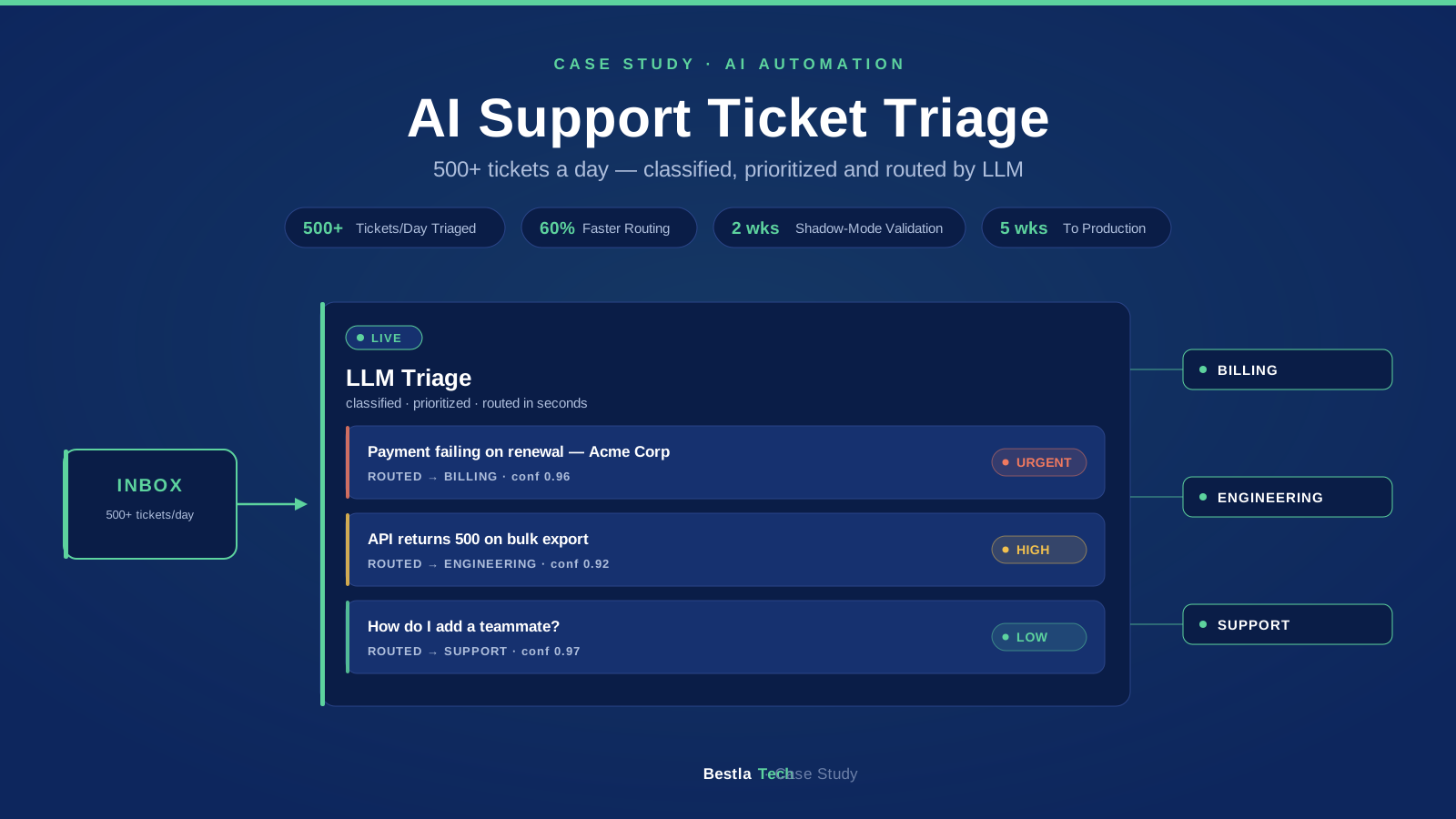
AI Automation / Customer Support
How a B2B SaaS Support Team Automated Ticket Triage with an LLM Pipeline: 500+ Tickets a Day, Routed in Seconds
LLM-powered support ticket triage for a B2B SaaS company: automatic classification, prioritization, and specialist routing of 500+ daily tickets, with confidence thresholds and human-in-the-loop review built in.
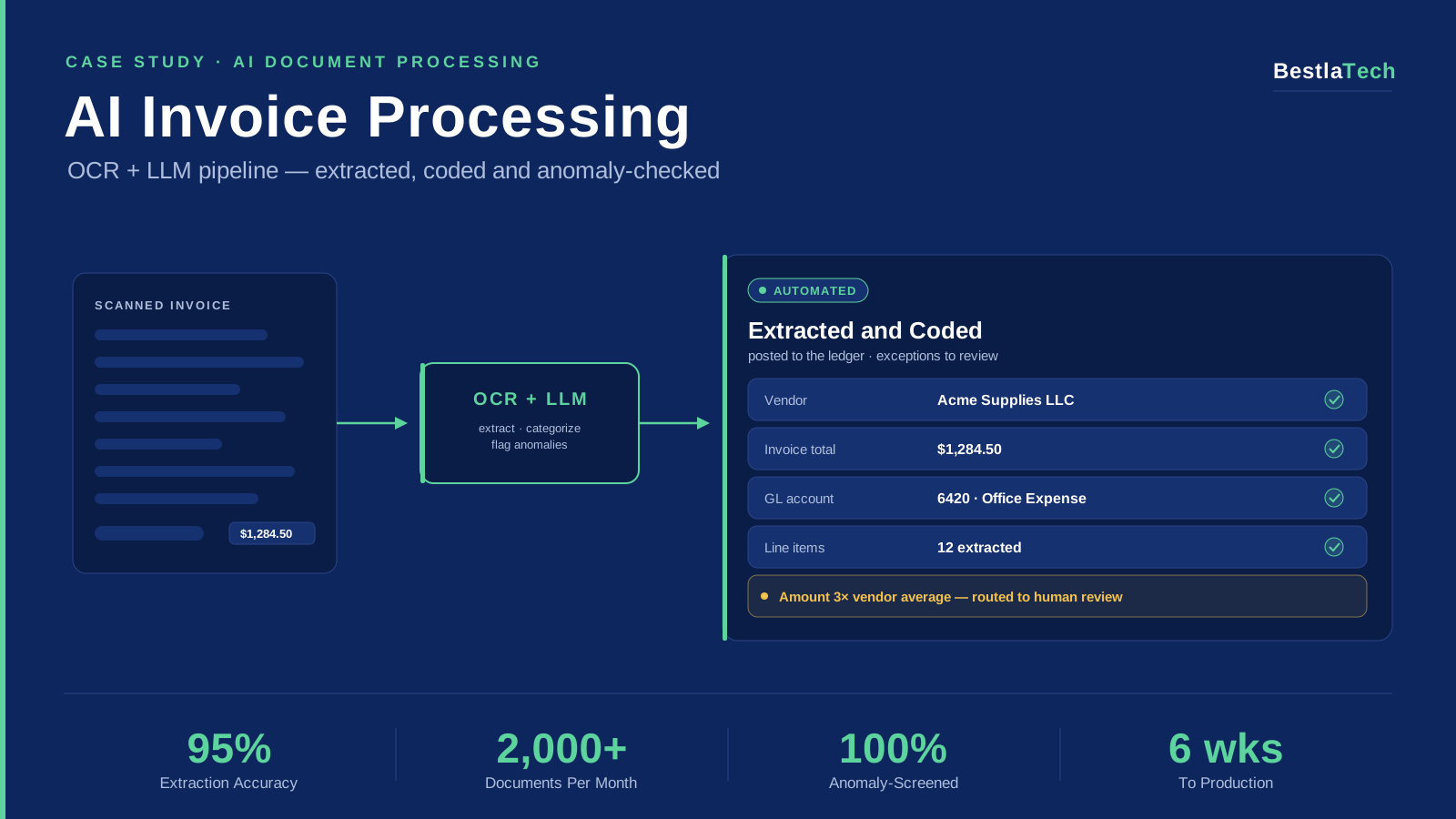
AI Automation / Accounting
How a US Accounting Firm Automated Invoice & Expense Processing with an OCR + LLM Pipeline: 2,000+ Documents a Month
AI document processing for a US accounting firm: an OCR + LLM pipeline that extracts line items from scanned invoices, auto-categorizes them to the chart of accounts, and flags anomalies, with a human review queue for low-confidence documents.
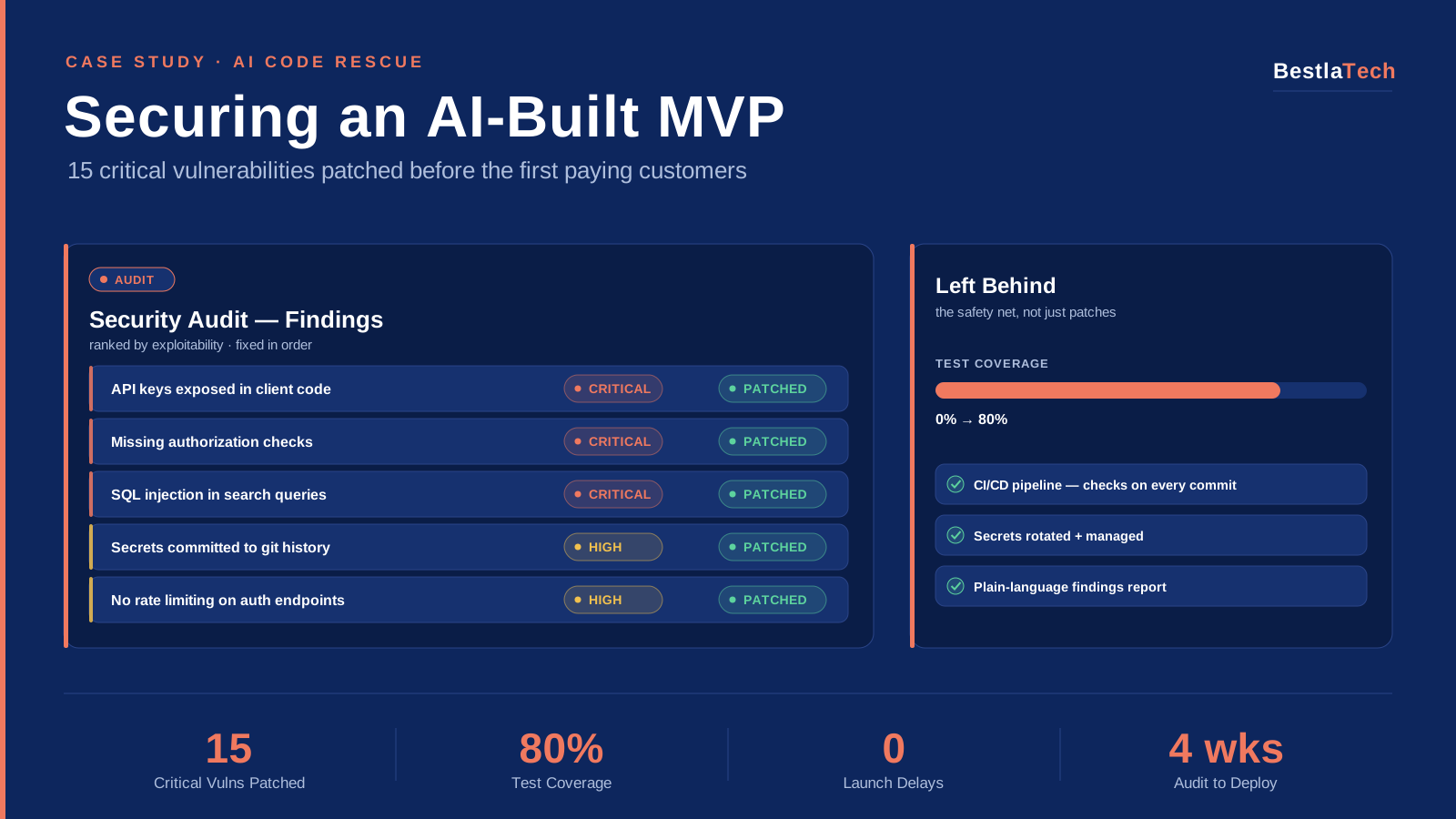
AI Code Rescue / Security
Rescuing an AI-Generated MVP: 15 Critical Vulnerabilities Patched Before the First Paying Customers Arrived
AI code rescue for a seed-stage SaaS startup: a security audit and hardening of an AI-generated MVP: 15 critical vulnerabilities patched, test coverage built from zero to 80%, and a CI/CD pipeline put in place before launch.
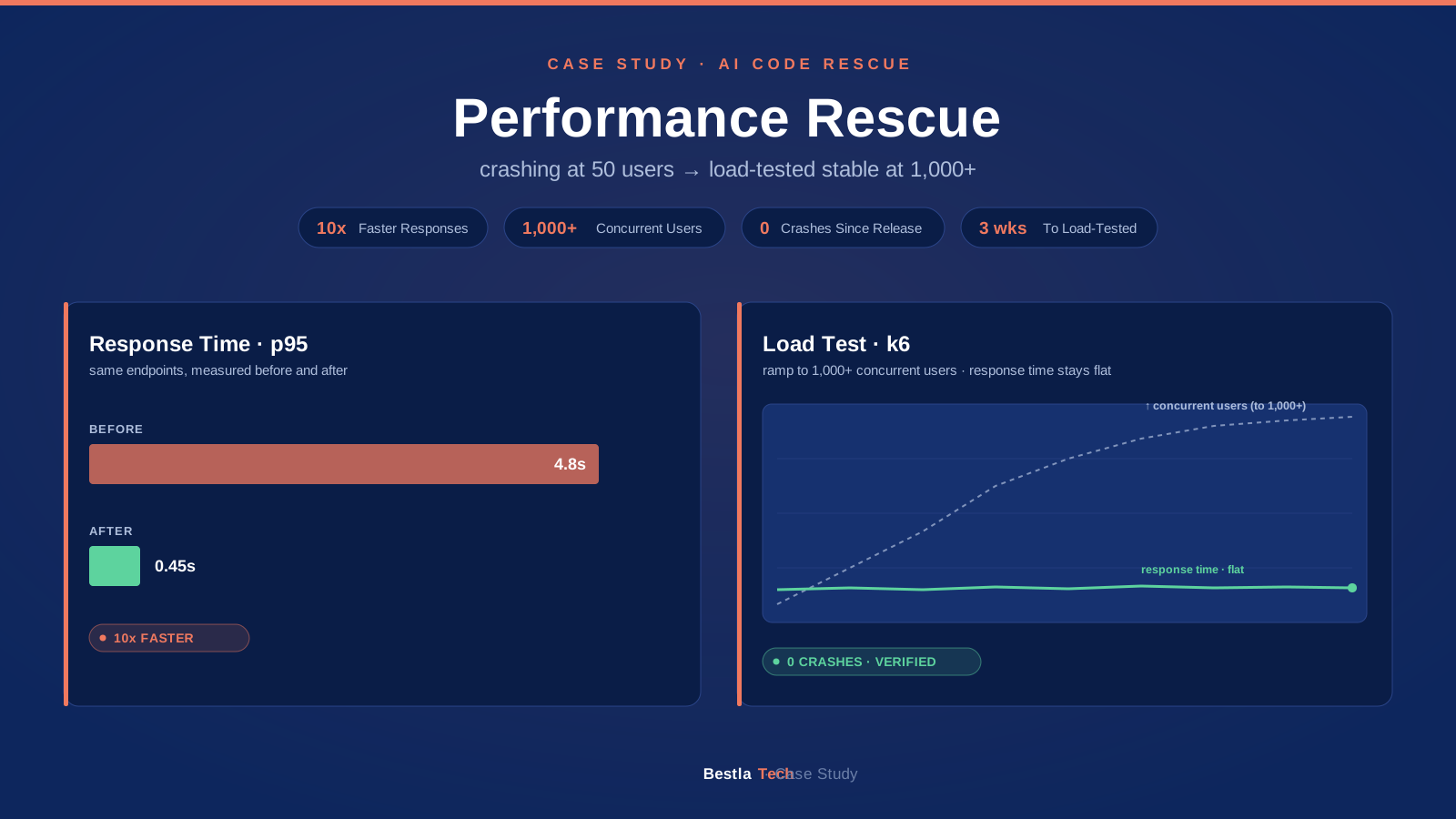
AI Code Rescue / Performance
From Crashing at 50 Users to Stable at 1,000+: Rescuing an AI-Generated App That Failed Under Real Load
Performance rescue for a consumer app startup: an AI-generated app that crashed under real traffic, fixed in 3 weeks: N+1 queries eliminated, memory leaks patched, caching added, and stability proven with load tests.
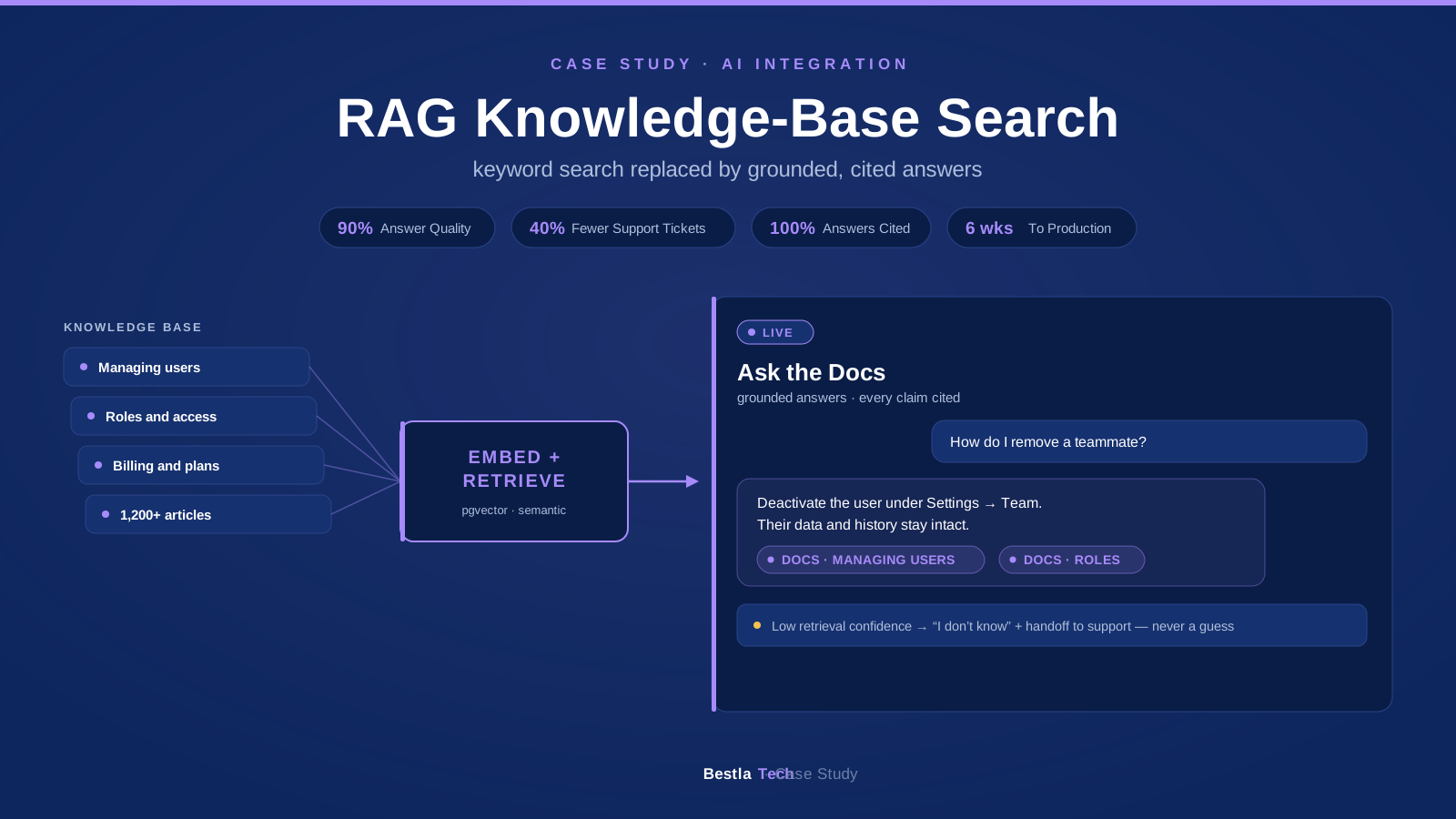
AI Integration / Knowledge Management
Replacing Keyword Search with a RAG Assistant: Grounded, Cited Answers Over a B2B Knowledge Base
RAG integration for a B2B SaaS platform. LLM-powered semantic search over the product knowledge base with grounded, cited answers, evaluated against a test set before launch. Support tickets down 40%.
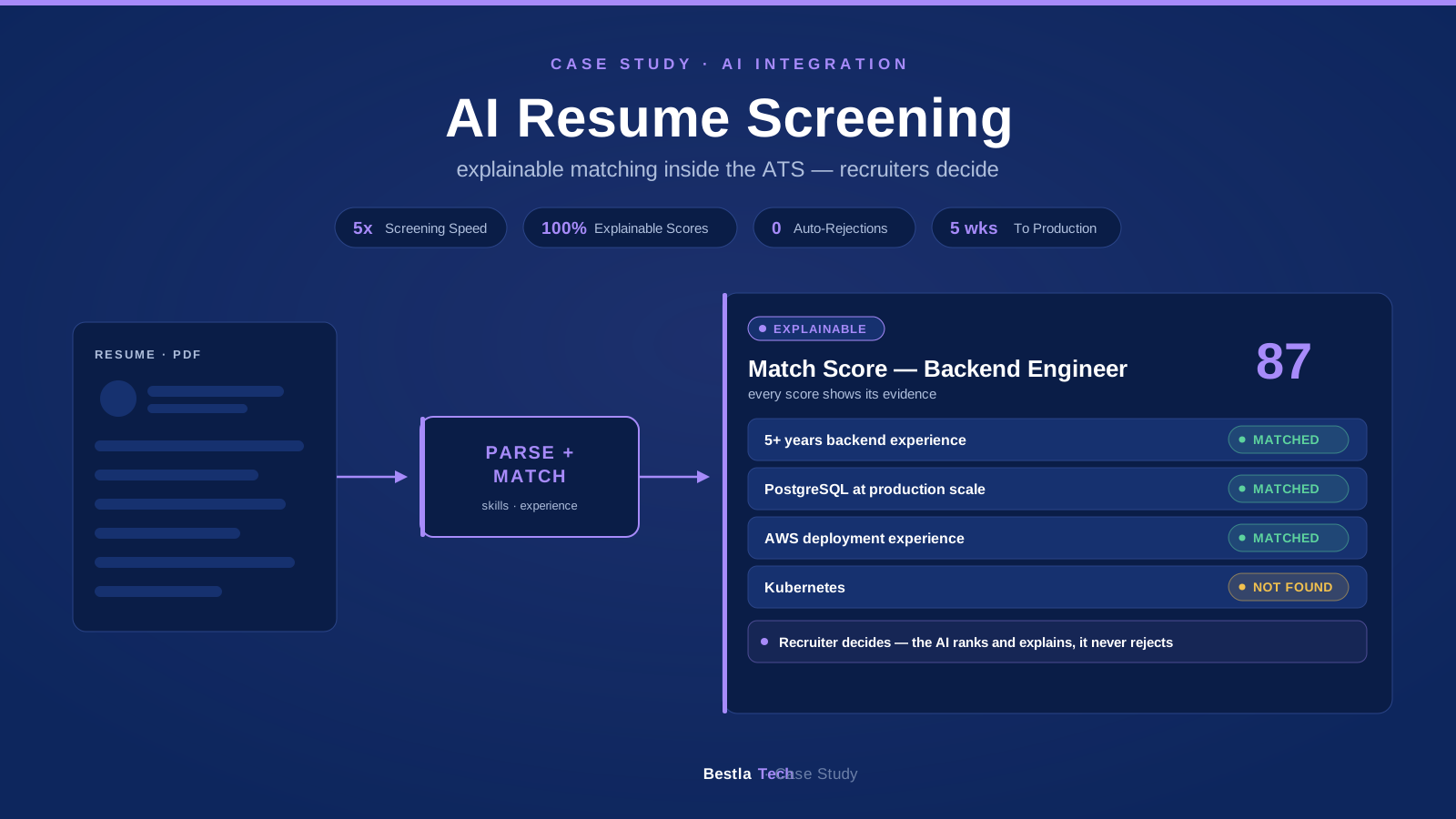
AI Integration / HR Tech
AI Resume Screening Inside an ATS: Parsing, Skill Extraction & Explainable Role Matching for an HR Tech Platform
AI integration for an HR tech platform: resume parsing, skill extraction, and explainable candidate-to-role matching built into the existing ATS workflow. Screening 5x faster, with recruiters making every decision.